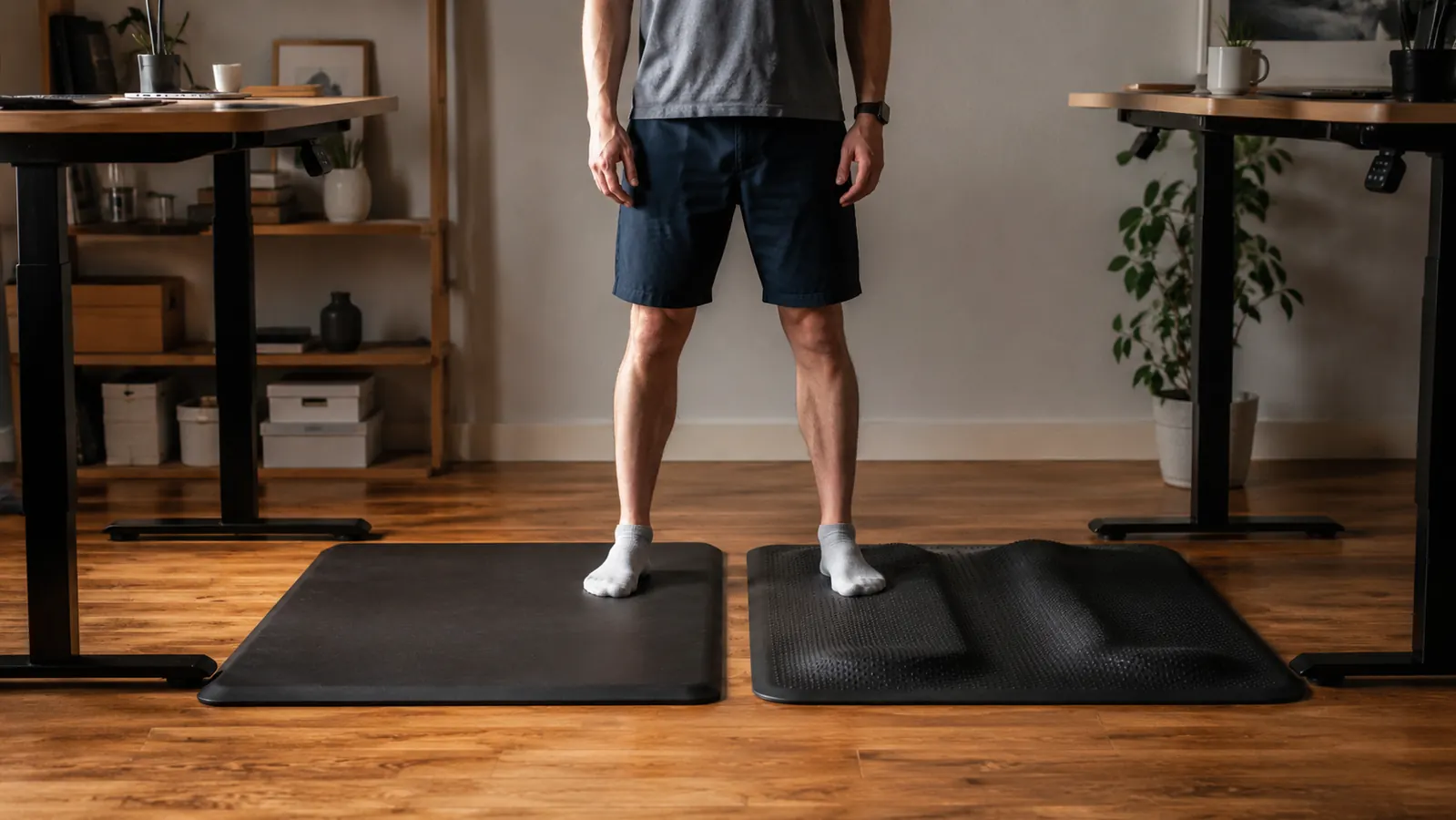
My first standing mat was budget-friendly. It was a thick rectangle of black foam, and I was confident it would fix the foot and calf fatigue I was getting after an hour of standing at my converter. It did not. By early afternoon my feet were planted flat on the foam, my weight was locked on my heels, and the mat was compressing under my right foot exactly the same way the hardwood floor had. I ordered a second one about four months later. Same story, just with a different color.
The third mat I bought was the one that actually made me read the product page before clicking. It had better reviews, a higher price, and a design that looked more serious than the others. Thick edges, beveled corners, a surface with some texture. I used it for three months and it was better, the cushioning held up longer and my feet did not compress through it as fast. But the fatigue was still there. Not as bad, but still there. Two in the afternoon, standing at my desk, and my calves would start that low-grade ache that told me I was done for the day with standing.
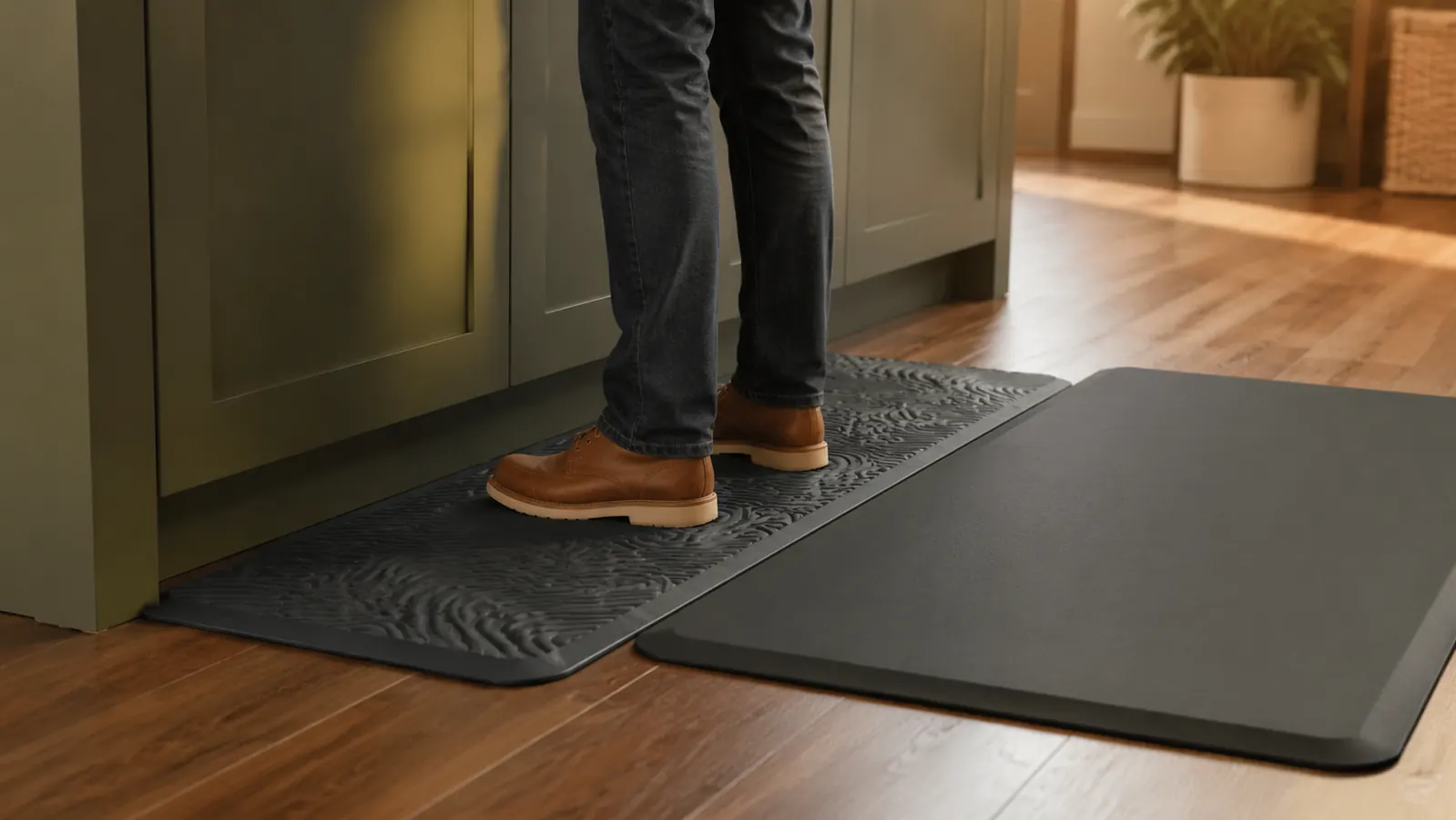
I want to be clear about what I was doing wrong, because I spent a long time thinking the problem was mat quality. It was not. The problem was that I was treating standing like a static activity. I was standing the way I used to sit: locked in place, weight on one spot, not moving. A flat mat, no matter how thick or well-cushioned, cannot solve that. It is a surface. It reduces impact. It does not change the behavior that causes fatigue in the first place. And that distinction matters a lot when you are deciding whether to spend modestly or invest heavily in a mat.
I learned this because a friend sent me a link to the Ergodriven Topo with a note that said, roughly, that it was not a cushioning mat, it was a movement mat. I looked at the product photos and I understood immediately what she meant. It is not flat. It has a raised dome in the center, sloped ridges along the sides, and beveled edges that naturally encourage you to shift your weight and change your foot position throughout the day. You see it and you immediately understand that it was not designed to absorb impact. It was designed to make standing less like standing still.
The Topo is not a cushioning mat. It is a movement mat. That distinction cost me three bad purchases before I understood it.
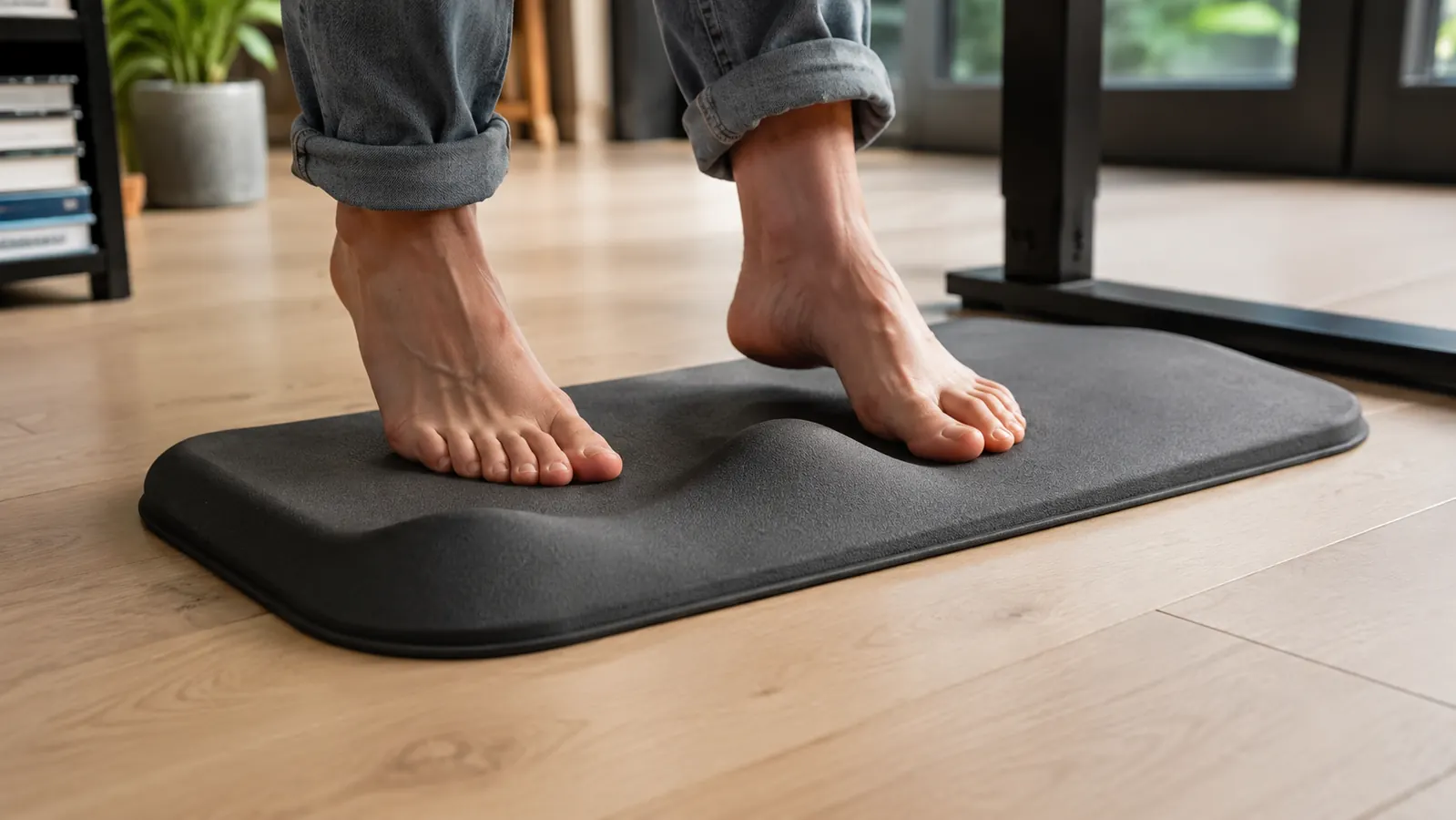
I ordered the Topo, standard size in black, and I remember the first afternoon I used it. I noticed within about thirty minutes that I was shifting my feet without thinking about it. My right foot on the slope, my left on the flat. Then both on the flat, then one on the dome. The position changes were small and natural. They were not deliberate. The mat just made it easier to move than to stay still, which is the opposite of what every flat mat I had owned did. Flat mats reward stillness. They give you a soft spot to stand on and then let you lock in. The Topo makes stillness mildly uncomfortable and movement comfortable. It sounds like a small difference, but the fatigue curve is completely different.
If your standing mat is leaving you achy by early afternoon, it might be the design, not the thickness.
The Ergodriven Topo has a 4.7-star rating from nearly 6,000 buyers. It is the mat I use every day on my own desk and the one I point people to when they have burned through two or three flat mats with the same results I had.
Amazon Check Today's Price on Amazon →I also want to be honest about the adjustment period. The first two or three days felt slightly odd. My feet were not used to the varied surface and I was more conscious of where I was placing them. The dome in the center is the feature you use most; I found myself resting my arch on it during calls when I was not moving much. By the end of week one that conscious awareness was gone and everything was automatic. I stopped thinking about the mat entirely, which is how good ergonomic gear should work.
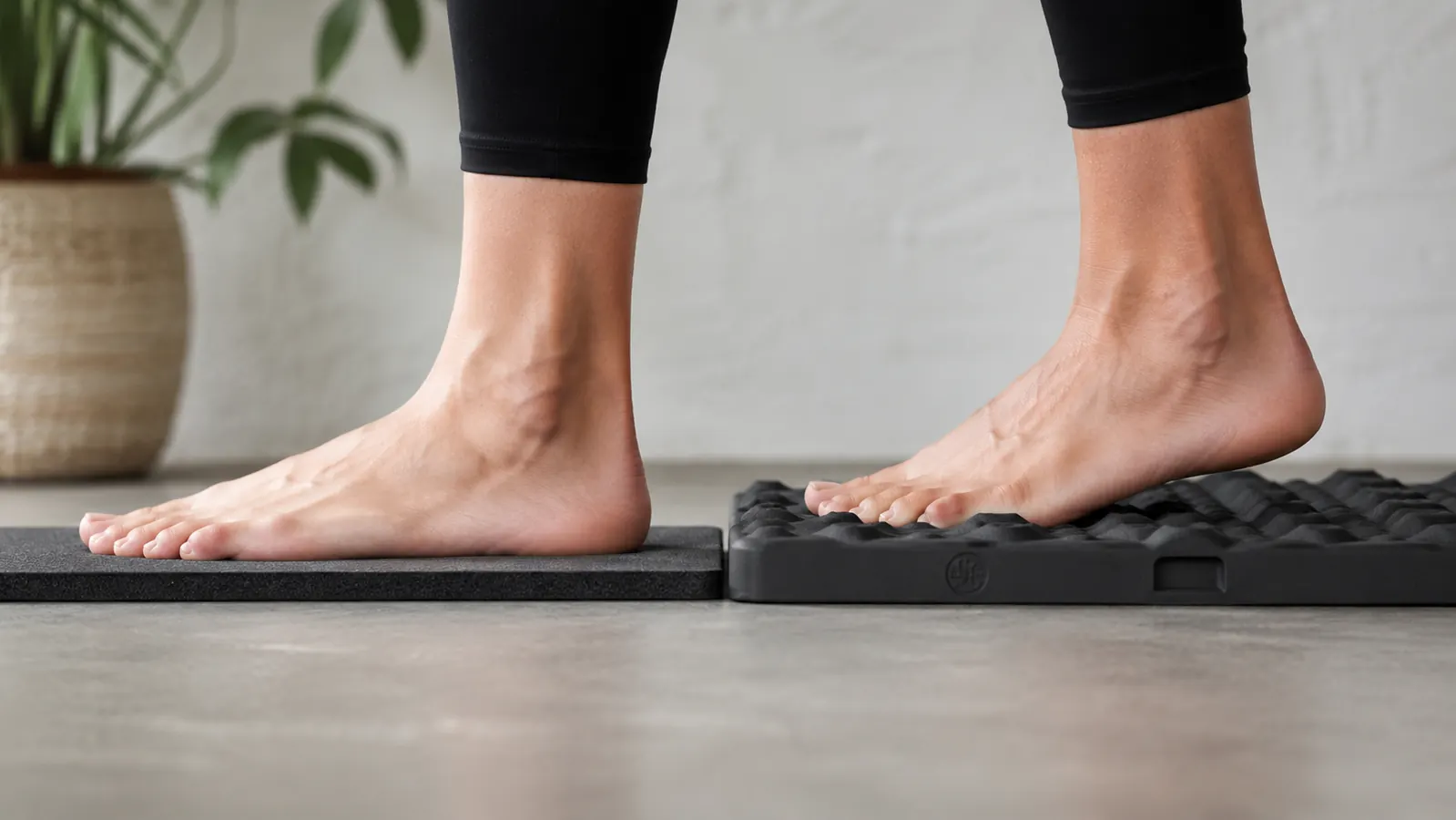
The build quality holds up. I have had mine for coming on fourteen months. The surface shows some scuffing and compression in the high-contact zones, which is expected. The foam has not bottomed out. The beveled edges have not cracked or separated. It still performs the same as it did on day one, which matters when you consider that my second flat mat was noticeably softer and less supportive by month four. The Topo costs more, but the longevity math is straightforward.
One practical note: it takes up more floor space than a flat mat. The standard size is 26 by 30 inches, and the contours mean you need clearance on all sides. In a small home office this is worth thinking about before you order. I moved my cable management tray back about four inches to give myself the full footprint. Completely worth it, but worth knowing in advance.
What I'd Tell You If We Were Sitting at My Kitchen Table
If you have a flat anti-fatigue mat and you are still getting foot or calf fatigue after an hour of standing, the mat is probably not broken. The behavior it encourages is. Standing still on a soft surface is not that much different from sitting still on a padded chair. The relief you feel at first is real, but it wears off fast because you are still loading the same muscles in the same positions for the same amount of time. What you actually need is a surface that makes you fidget, shift, and redistribute your weight without you having to think about it. That is what the Topo does. It is not magic and it is not cheap. But after three flat mats, it is the first one I would buy again without hesitation.
Done guessing with flat mats? The Topo is the standing mat built around the actual reason standing wears you out.
Ergodriven Topo, 4.7 stars, nearly 6,000 reviews. Check current pricing and availability on Amazon.
Amazon Check Today's Price on Amazon →